Last week I had the privilege of chatting with Jenny Schmidt of Channelmom, a radio show broadcasted on Denver’s KLVZ station. Along with her team at Channelmom, Jenny’s mission is to love, coach, and encourage mom’s worldwide. We talked about the pain behind Mommy Wars and discussed the controversial subject of Public School Education vs. Home Schooling for Christian moms. The 2-part interview airs TODAY and TOMORROW at 5:30pm East Coast Time and 3:30pm Mountain Time. Click on the link below to listen live!
I was twenty-five years old when I signed up for a Facebook account, and in many ways I can’t imagine how my middle and high school experience would’ve been impacted had the world of social media been available to me. Which is probably why the notion of raising my kids in this Brave New World feels so intimidating. With that in mind, I turned to a group of older, wiser moms of children 10-18 years old. I asked them several questions regarding kids and social media, and from their responses drafted 5 basic principles for parenting in the digital generation.
1. Know Your Child
This was one of the most compelling statements I heard from a mom: “I think young people behave online as they behave in their day to day lives. If you see pettiness and dishonesty day to day, it will come out online. If the day to day habit of life is to act with honesty and respect, the same will occur in their electronic communication.” In this same vein, a few of the moms I polled adopt a zero social media policy, simply because they believe their children aren’t ready for it.
2. Establish Ground Rules
The #1 rule the vast majority of moms either established or wished they had established was to keep all computers, X-boxes, and televisions out of their child’s bedroom and in a public living area. Alongside this, virtually every mom agreed that it was wise or would’ve been wise to keep cell phones out of their child’s room overnight. The second most widely adopted rule was that parents had to be privy to all social media activity. While some parents simply “friend” or subscribe to their children’s on-line profiles, others require the password so they can see all private messages as well. One dad who requires his kids to hand over their passwords explained to me that the notion of “privacy” for a teenager is bogus when it comes to social media, because by its very nature social media is a public sphere. Naturally, rules entail consequences. When one mom discovered that her kids had used iPods to secretly open up Instagram accounts, she took away the iPods–not because her kids had created accounts, but because they’d done it deceptively.
3. Educate Your Kids
In addition to ground rules, most parents talked to their kids about the dangers of the Internet, the permanence of what’s posted on it, and the fact that what we write shapes how we’re viewed. As a former teacher, I remember sitting in a meeting as the headmaster announced that for the first time our school was making the decision to expel a student for Facebook activity which the student refused to erase. The lesson? Writing on-line is not the same as writing in a journal, and kids need to realize that the consequences aren’t the same either.
4. Put Technology to Work for You I loved this mom’s practical advice: “I think the best thing we ever did was pay 5 dollars a month for parental controls on our Verizon account. It was easy to manage and I could set it up and change it to fit whatever situation arose. I could have the phone go off at certain times on school nights and extend the hours on weekends. I could block numbers of certain “friends” altogether. I could also see who was texting, when and how much. I couldn’t see the text but just the amount of time spent texting.” This same mom also made me aware of the free “Life 360” app, which can be installed on your children’s phones to track where they are, a particularly helpful tool when they’re old enough to drive. She said, “We never ran up against any of the kids feeling like Big Brother was watching because we implemented most of these things early and they just became accepted.”
5. Use Social Media as an Opportunity for Biblical Instruction
One thing is for sure: when it comes to social media, there’s a steep learning curve, which (yes) makes us nervous but also presents an awesome opportunity for real life training. Whether the scenario is as mild as a child posting something she later regrets, or as significant as ruining relationships and losing friends over a post (both real stories moms shared with me), social media gives us the opportunity to teach in the context of the moment. And it’s not all about protection and prevention–social media has HUGE positive potential for influence. One mom said her kids use Facebook to share their faith and promote youth group activities. Amen! I’m actually Facebook friends with her kids and can honestly say few things are more encouraging than seeing a high school boy openly and passionately proclaim the goodness of God via Facebook.
Final Thoughts After all my research was through, I noticed one over-arching pattern. The parents who felt the most positive toward social media were the ones whose kids talked to them about social media issues. In other words, the parents with the closest relationships to their children felt the most confident when it came to social media. Which leads me to a very interesting conclusion: I don’t think social media is really the issue. I think the real issue is the heart. Social media is just one more realm for the beliefs, desires, and motivations of the heart to expose itself.
Maybe, then, the focus of my concern shouldn’t really be a computer, but the souls of the two little girls God has graciously entrusted to me. Maybe the best thing I can do now to prepare my kids for the world of social media is to know my kids now. To play with them while they still want to play with me, listen to them while they still want to talk to me, build a relationship with them while I’m still their favorite person in the world. And one day when they ask for a Facebook account, after I’ve established rules and set up parental controls, I’ll remember that ultimately my Hope isn’t in any of those things. I’ll remember it’s in the One who has the power to protect and sanctify their hearts.
You May Also Like:
Can You Really Raise a Child with an Unbiased WorldviewSecrets of a Sinful MomThe Woman I Wish I Could Be
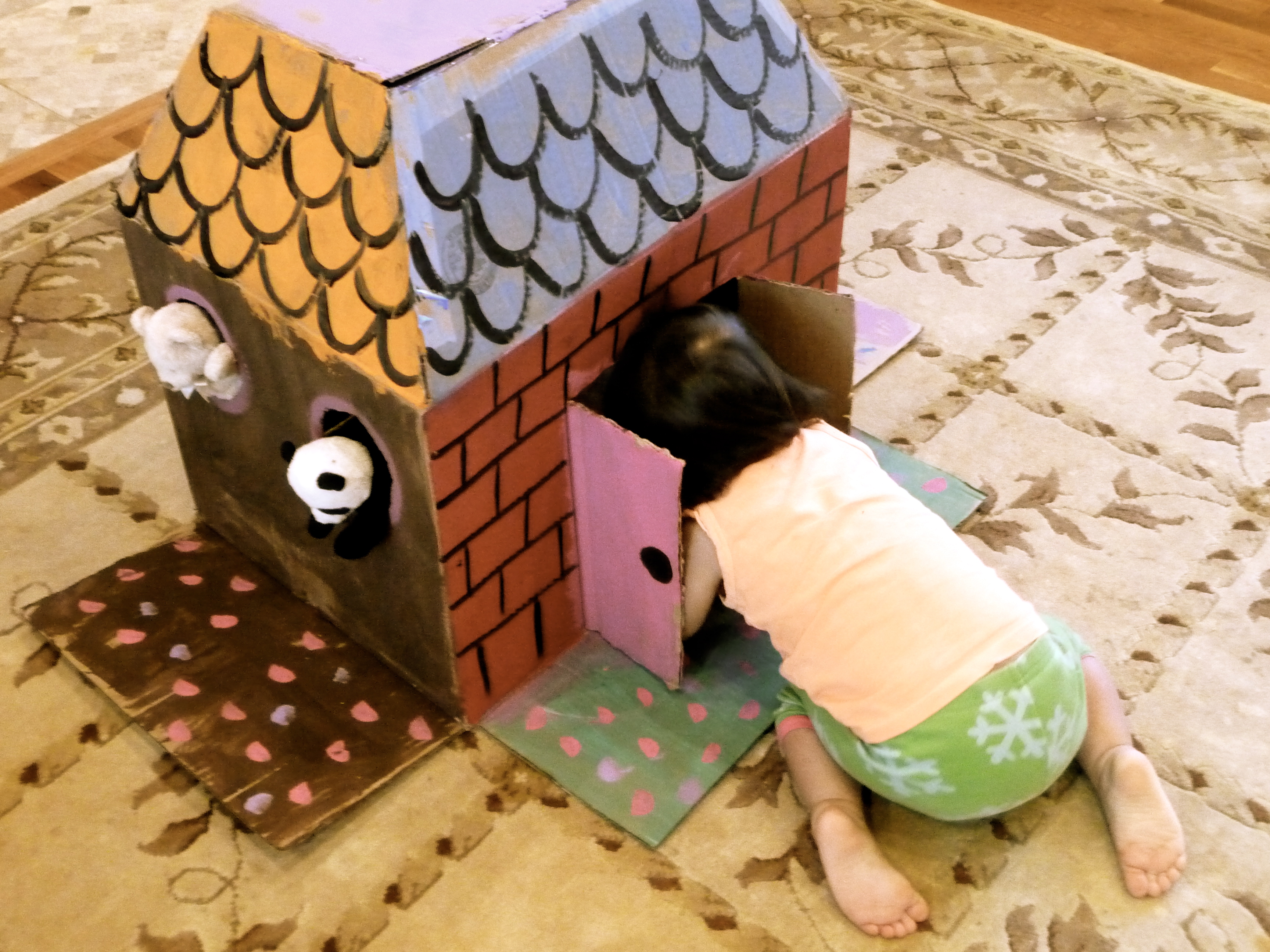
This is one of my kids’ favorite boring-day projects. We start with a large cardboard box (if it’s got images on it–like a diaper box–turn it inside out). I use the bottom of the box for the roof and the open top flaps as the “grassy lawn.” Cut off the back flap of the “lawn” and use it to enclose the top of the roof (see the purple strip on the very top of our model). Once you’ve constructed the house, let the kids paint it, add whatever details you want, and then after it’s dry invite the stuffed animals (and perhaps small toddlers) to come on in!
Article: Is Public School An Option? by Al Mohler People frequently ask me where I plan to send my kids (now 4 and 2) to school. The answer is, I have no idea. I’ve taken no strong stance on public schooling, private schooling, or homeschooling, simply because I haven’t needed to think about it. But that luxury is rapidly evaporating, and I find myself wondering, how am I going to school my kids? For any parent asking the same question, I think this article is worth reading. Al Mohler examines the historical influences that impacted the changing ideology behind public schooling, and why he believes public schools are becoming less of an option for Christians. I’ll warn you, the article takes a strong stance on an already heated issue, but in my opinion it never hurts to learn the facts–in fact, it may hurt not to.
Product: “Baking Everyday Better” Homemade Treats
With Thanksgiving and Christmas right around the corner, these tasty made-from-scratch (affordable) treats are a great idea for local folks hosting parties. I can personally vouch for the A-MAZING cinnamon rolls and Oreo Grasshopper Cake, and I hear the Lemon-Raspberry Cake is divine! Although this has nothing to do with the treats themselves, I can also vouch for the incredible heart of the baker, Destiny. Check out the Baking Everyday Better Facebook page to place an order.
Movie: Lee Daniels’ The Butler
While I’ve heard this movie was very loosely based on the true story, the sheer life span of this one butler is remarkable. The character Cecil Gaines (based on Eugene Allen) lived to serve eight American presidents through the tumultuous years of the Civil Rights movement. To me, the most fascinating aspect of the movie was the way it showed two different African American men’s approaches to surviving and thriving during an evil and oppressive era in our history. While Gaines’s son fights for equality, his father chooses to serve the very men shaping the future of the United States. This movie opened my eyes in a new and meaningful way, leaving me in tears as I watched a man who was born into oppression live to see an African American elected president of the United States.
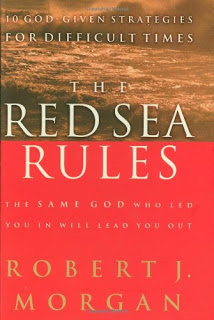
Book: The Red Sea Rules by Robert Morgan Have you ever felt like you were in an impossible place–a scary, painful, “where is God” kind of place, and you just longed to sit down with a cup of coffee and a really wise somebody who could give you some advice? If so, you need to sit down with Robert Morgan. In his book, The Red Sea Rules, Morgan uses the Red Sea account in Exodus to draw out ten practical principles for difficult seasons of life. The book is short and to the point, built around the truth that “The same God who led you in will lead you out.” This book comforted me at a time when I felt abandoned by God and needed perspective on how to face suffering as a believer.
You May Also Like:
September Favorites8 Ways to Cultivate a More Restful HomeDangerous Daydreams
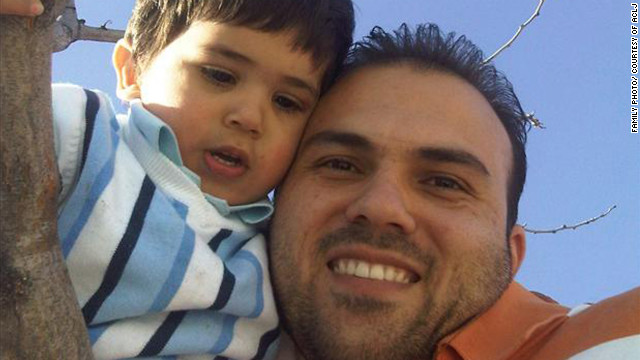
Today, all across the world grassroots prayer vigils are being held on behalf of Saeed Abedini, a Christian pastor, husband, and father who has been tortured and imprisoned in Iran for exactly one year today. Pastor Saeed converted to Christianity thirteen years ago, and has been arrested ten times since then. He was imprisoned in 2009 and released after agreeing to stop supporting home churches. According to his wife, Abedini felt it was safe to return to Iran, his native home, since agreeing not to work with churches. But last September, while crossing into Iran from Turkey via bus, immigration authorities seized and arrested him. He was sentenced to eight years in the notoriously brutal Evin prison in Iran. I first heard Pastor Saeed’s story through a Facebook news feed several months ago. At the time he was in extremely poor physical health due to beatings and mistreatment in prison. His wife and many others fear he will not last eight years.
What Can I Do?
Send a letter to the Iranian government on Pastor Saeed’s behalf. This morning on the radio, I heard his wife say they are hoping an influx of mail will urge the Iranian government to reconsider her husband’s imprisonment. They’ve set it up so that all you really have to do is type in your name, and press “send.” (View the letter Billy Graham wrote the Iranian president on Saeed Abedini’s behalf.)
Join one of the many prayer vigils, meeting today. I think it would be incredible to gather with a throng of believers on behalf of the persecuted church, to pray for our brother in Christ and experience the POWER of the body united (Matt 18:20). If you don’t live in a city where a vigil is being hosted, gather your family and pray! You can join the vigil spiritually if not physically.
Share his story. Put the miracle of the digital generation to use for the gospel of Christ! The more we raise awareness, the better.
To read more about Saeed Abedini, click on the links below.
Dear Clint,
Today you turn 31 years old, and if there’s one thing I’ve learned over the years, it’s that I don’t even want to imagine my life, without you.
You May Also Like:
10 Reasons You & Your Man Ought to Get Out of TownOn My 28th BirthdayOn Leaving a Legacy
Like many things I blog about, this topic has been on my mind not because I’m so good at it, but because I’m quite the opposite. In my September favorites I linked up to an article about seven purposes for the home. I found the article so convicting that I decided to spend some prolonged time meditating on each purpose, the first being “the home as a place of rest.” I asked myself how I could make our home more restful. Here are some thoughts from someone who still has a long way to go.
1. Make rest and refreshment a personal priority. Nobody wants an anemic for a blood donor. Sure, I could wake up running and not pause for breath until bedtime, but I’d probably look more like Medusa than Martha Stewart. And honestly, the first to suffer would be my family. So how do I make time for rest? I’ve found 3 times in the day that I can use for different forms of personal rest. The first is before the kids wake up (normally I’m unconscious during this time, but I’m working on it). The second is in the afternoon when the baby naps, and the third is after the kids go to bed. Look at your schedule. Where could you allot some time for personal rest?
2. Recognize that there’s a hierarchy to rest. Not all restful activities are created equal. Watching thirteen movies in a row may be restful, but not rejuvenating or nourishing. If we want lasting rest, the Bible says it only comes in a Person (Matt. 11:29). I don’t think that means there’s no room for personal hobbies, it just means those forms of rest shouldn’t trump the most important form. Ideally, I’d like to spend time with the Lord first thing in the morning, have an hour in the afternoon to blog or read, and spend time with Clint in the evening. How are you using your free time? Is it providing lasting rest?
3. Enforce a consistent bedtime for the kids. From the moment our kids exited the womb, we started putting them to bed at 7pm. Of course it took time to get them used to the routine, and it’s always necessary to deviate now and then, but on a typical day at 7pm it’s Daddy & Mommy time. Good night, kiddos, we’ll see you in the morning! It’s healthy for their little bodies, my sanity, and our marriage. If your kids don’t have a consistent bedtime, what sort of nightly routine could you create to help them develop one?
4. Work to maintain an efficient home. Isn’t it ironic that we have to work hard in order to rest well? But if the house is a wreck with no clean clothes and no food for dinner, how restful will it really feel? I’m finding that the more I invest into the home, the more my family enjoys being in it. But there’s a fine balance! As I’m doing my best to manage the home diligently, I must remember to…
5. Love the people in the home more than the tasks of the home. Of all the items on my list, this is the hardest for me. Isn’t that a sad confession? It is to me, too. And yet the #1 reason our home isn’t more restful is because I can be a drill sergeant about maintaining it. Slowly, I’m beginning to realize that this is idolatry–it’s loving “order” more than God’s mandate to be kind and gracious with my family. Is your approach to maintaining the home balanced? Do you need to become more diligent, or more gracious?
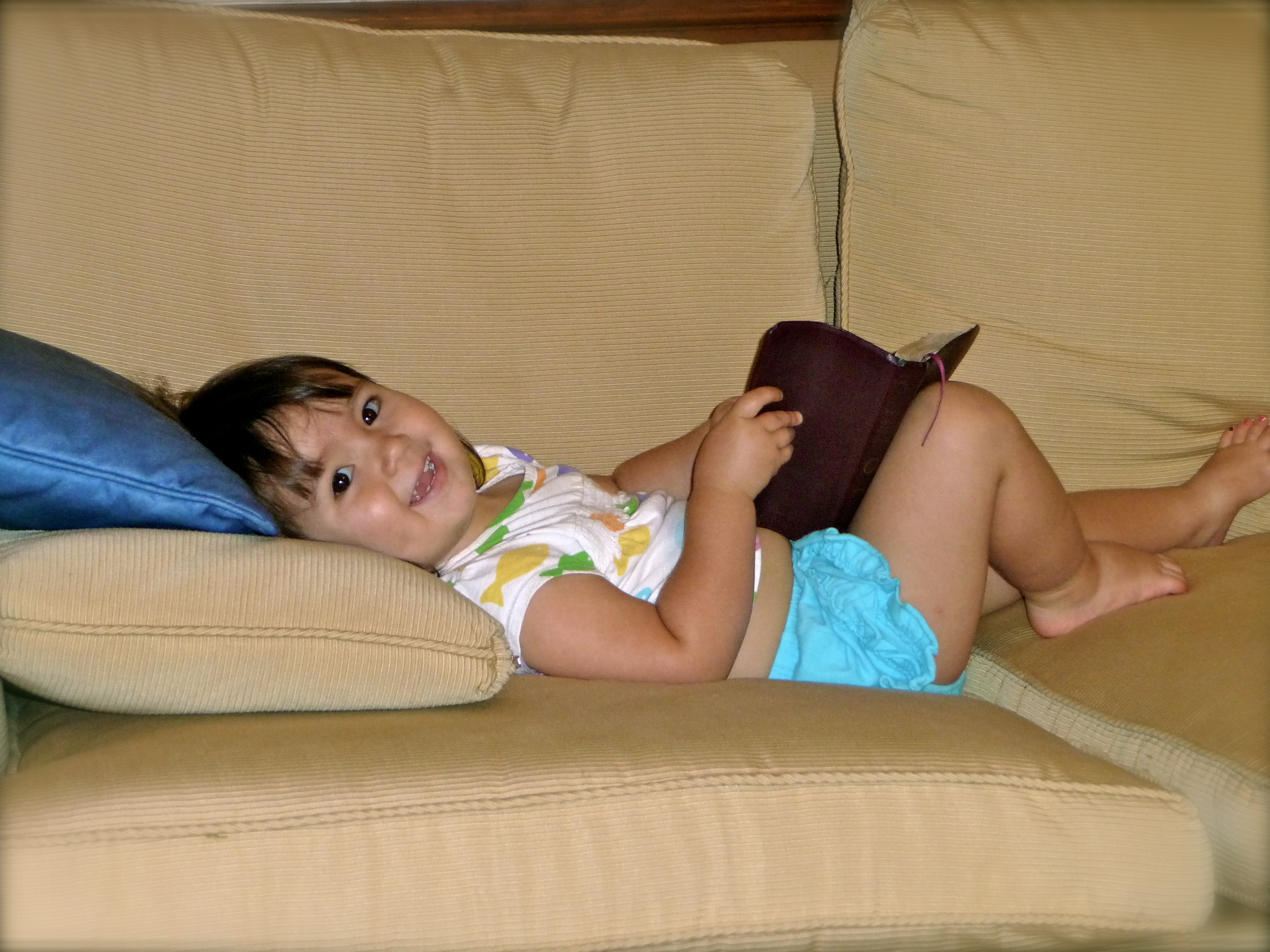
6. Have a daily “down time” for the kids. Once my pre-schooler outgrew nap time she started having an afternoon “quiet time.” She picks a few sets of boxed toys out of the closet and plays in her room for 1-2 hours. There are so many benefits to this–Aubrey learns to play independently and be imaginative, Heidi gets a quiet nap time, and I have an afternoon break. Depending on the ages of your kids, how could you establish a designated “down time” for them every day?
7. Find opportunities to bless your husband with alone time. I know my husband often feels guilty taking any time to himself. Because he works all day, he feels like every other moment should be spent with the kids. But if he’s going to serve and lead our family well, he needs time to rest and rejuvenate. What does your husband find restful? How can you give him some down-time this week?
8. Be at peace with those within the home. Nothing transforms a restful home into a war zone faster than discord. Colossians 3:12-17 urges believers to bear with one another, to forgive one another, to allow the peace of Christ to rule in our hearts, and to let the Word of God dwell so richly within us that we admonish one another in wisdom and gratitude. Let me ask you two last questions that I’m also asking myself: Am I at peace with every member of my household? If not, what steps can I take today, to restore the peace?
You May Also Like:
Making Family Gatherings MeaningfulWhen Mom Just Needs a Good CrySo…what do you do?
The notion of raising a child with an “unbiased worldview” is growing increasingly popular. Parents want to raise children who are “free to find their own spirituality” without the bias of the parent’s preference. Conversely, attempting to raise a child with a biblical worldview seems to be going the way of high water pants and dial-up internet access. Not only is it unpopular, it’s often viewed as arrogant, controlling, and close-minded. Parents are seen as “imposing their worldview” upon their children, even “brainwashing” them.
The issue is so loaded that I’ve heard Christian parents question whether or not they should raise their children spiritually “neutral.” It just seems so intolerant, even manipulative, to teach an impressionable young child that God is real. That God created her in His own image for His own glory. That she inherited a sin nature from Adam. And that God loves her so passionately that He Himself died in her place to save her.
But here’s the bottom line–every parent raises their child with a biased worldview. We are constantly teaching our children how to view the world, whether we “mean to” or not. Every time they see us rejoice or get angry, we are teaching them something about what we value. The fact that you probably choose to raise your children in a home, with food and clothing teaches them that you find those things important. And if you get down on one knee and tell them that they can determine who God is for themselves, or that they can accept or reject any religion with no consequences–you are not raising them spiritually neutral. You are raising them with a very particular, biased worldview.
Thus the question isn’t should we influence our child’s worldview. Like it or not, we’re already doing that. The real question is how should we influence it? If you are a believer, the Bible gives you an answer. In Deuteronomy 6:6-7, after exhorting the Israelites to love the One True God with their whole hearts, Moses issues a mighty charge: “And these words…shall be on your heart. You shall teach them diligently to your children, and shall talk of them when you sit in your house, and when you walk by the way, and when you lie down, and when you rise.”
Clearly Christians are to be intentional about raising their children in the discipline and instruction of the Lord (Pro. 19:18, 22:6, 23:19; Eph 6:4) recognizing that only God has the power to save (John 6:44). Fulfilling this biblical mandate is loving not controlling. Think about it this way–you and I teach our children countless things from the moment they’re born. We teach them that the bump below their eyes is called a “nose” and that cows say “moo.” Nobody calls us close-minded or accuses us of “brainwashing” when we do this. Inherently, they recognize our teaching as truth. So dear Christian, if you really believe Christ’s claims are as true and real as the nose on your daughter’s face, how could you not teach them to her? How could you withhold the very Truth that has the power to save her soul on the grounds of allowing her the freedom to “find her own way”? If you’re willing to teach her that there’s a nose on her face, be willing to teach her the truths that matter so much more than that.
If you don’t believe the claims of Christ, then I understand why you wouldn’t teach them to your children. I don’t judge you for influencing your child according to your personal beliefs. But I do urge you not to judge Christians for doing the same thing, and not to deceive yourself into believing you are raising your child neutrally.
One final thing: To those of you who don’t know what you think of God, to those who are indifferent to Him, and those who hate Him–I wholeheartedly believe God loves you more than you could ever fathom (Romans 5:6-8) and longs to have a relationship with you (2 Peter 3:9). Regardless of what you’ve done or what’s been done to you, He is faithful and trustworthy. He is capable of bringing beauty from ashes (Isaiah 61:1-3), of restoring what’s been lost (Joel 2:25), and of making you a new creation in Christ (2 Cor. 5:17).
You May Also Like:
The SojournerThe Marriage Conversation You Ought to Have
Hello, September! I’ve been waiting for you. May cooler days and autumn shades be close on your heels! Here are some fresh favorites to start the month.
ACTIVITY: Stir Up Some Imaginary Soup
A great outdoor activity for a boring afternoon! Gather one big bowl per child, a handful of creative kitchen utensils, all your old spices and whatever other pantry items you don’t mind “wasting.” (I filled coffee filters with things like oatmeal, coffee grounds, and flour so after we made a big mess we could just throw it all away.) Remember grass, dirt, flowers, and rocks also make great ingredients for imaginary soup. More details at One Perfect Day.
ARTICLE: What is the Purpose of the Home? Recently I stumbled upon this article, published several months ago by Lindsay of Passionate Homemaking. (In February of this year Lindsay took an indefinite sabbatical from blogging, but you can still peruse her site, linked above). I’ll be honest–this article was exciting, inspiring, and painfully convicting for me. In order to determine the purpose of the home, Lindsay read every Bible reference related to “home,” coming up with 7 purposes for a home. Saturated in Scripture, this article is an excellent guide for any woman in need of some fresh encouragement regarding the incredible calling to be a “keeper of the home” (Titus 2:5).
PRODUCT: Cranium Hullabaloo When Aubrey’s best friend brought this game over for a play date, it took me two seconds to realize it was brilliant. The game comes with a stack of brightly colored felt pads in different shapes, featuring different images of animals, instruments, and food. After the kids scatter the felt pads on the floor, the Hullabaloo tape player bursts into song telling them to hop to a yellow patch…twirl to a square…put their elbow on an animal… It’s a great way for squealing toddlers to practice their shapes, colors, and gross motor skills, not to mention get giddy with friends and family members.
BOOK: When Crickets Cry by Charles Martin A great fiction novel about a world-renowned heart transplant surgeon who goes into hiding after a mysterious loss, only to cross paths with the one little girl who can give him a second chance at everything.
If you’ve rolled your eyes at Christian fiction before, assuming it’s all trite and watery, give this one a chance! The only thing watery will be your tear ducts. (Okay, that was cheesy, but the book really isn’t! He’s a much better writer than I am 🙂 ).
Happy September!
P.S. As I re-vamp my monthly favorites section, previous favorites will be temporarily MIA.
You May Also Like:
2013 Book ListHow to Make Scrumptious SushiTo Those of Us Who’d Like a Fresh Start
Occasionally Clint comes home to the kind of house the biblical womanhood books urge us to cultivate—peaceful, joyful, and in order. Often he comes home to the slightly more frazzled version. But every now and then he comes home to the blank-faced, empty-eyed, wife-of-exhaustion home. Last week I had one of those nights. If I was a punching bag I’d have been entirely flat. All done. He found me sweaty and woefully shower-deprived, chopping sweet potatoes in the kitchen, vacantly wondering if one roasted starch could qualify as dinner. Clint took one look at me and said, “Why don’t you go out for dinner tonight? I’ll feed the kids and put them to bed.”
For a moment I thought the clouds might part and a dove descend from heaven. “Are you serious?” Before he could answer (or change his mind) I was in and out of the shower, running out the front door with soaking wet hair and the first pair of clothes I could find.
“Where are you going to eat?” Clint called.
I flashed him a mile-long smile. “I don’t care!!”
For an hour and a half I enjoyed sushi, shrimp, and sweet silence. But here is a really honest admission—sometimes, even in the oasis, I feel anxiety. I think it’s because deep down I’m afraid I will always end up back here, in this place of depletion and discouragement. And I want to grow past that. After all, I’m an overcomer in Christ. I have two beautiful children who are watching me. And let’s be honest—there’s not always going to be a Japanese steakhouse when I need it.
So the question I’ve been asking myself is what drives me to this point? When I was a teacher there were stressful days, but I never felt like a coma would be welcome relief. I don’t know if it’s the ultimate answer, but one of the conclusions I’ve drawn is that parenthood is just different from any other vocational calling. Most jobs allow for a sense of separation. You clock in and clock out. You maintain personal boundaries. You become as emotionally invested {or detached} as you want.
And then along come children, and in five seconds flat they invade all of you, running full speed ahead into your heart, your mind, your life, and occasionally your shower. I used to think that after having kids Clint and I would still sometimes live like we didn’t have them. Maybe we’d go on a romantic vacation, or hire a sitter and go out with friends. And we did. But what I didn’t realize is that once you have kids, they are always a part of you. Even when they’re not around physically, you think about them, pray for them, wonder if Grandma remembered to put their toe medication on before bed. They are woven into your DNA. It’s surreal and precious. It’s the reason I cry every time another candle on the birthday cake reminds me that they’ll one day be grown.
And at the same time, it’s challenging. Kids don’t ask for a portion of your heart or a little bit of your effort. They ask for all of you. They need all of you. When you want to burst into tears because you just had a fight with a friend, they’re right there beside you wanting to know—“Why are you crying? What’s wrong? Explain it to me, Mom. Help me understand this world, Mom. I’m hungry, Mom. Meet my needs, Mom. Be there for me, Mom.”
But here’s the game changer. You and I have a Parent, too. And unlike us, He’s perfect. The Bible says, “To all who received Him, to those who believed in His name, He gave the right to become children of God” (John 1:12-13). If you have taken Christ at His Word, surrendering your life to Him because you believe He is who He says He is, then you are His child. Which means you are allowed to run into His arms and burst into tears just like your baby runs into yours. And boy are the arms of Jesus tender. In Matthew 23, even as He is rebuking Jerusalem, Jesus says, “Jerusalem, Jerusalem, you who kill the prophets and stone those sent to you, how often I have longed to gather your children together, as a hen gathers her chicks under her wings, but you were not willing.”
O Jesus, I am willing. I am willing to be gathered into your arms. I am willing to find strength in Your strength (Eph 6:10) and rest in Your rest (Matt 11:28-30). I am willing—I am longing—to be parented by You.
You May Also Like:
A Romanian Bride & the Bigness of GodSecrets of a Sinful MomPaperman, Head Over Heels, and Other Thoughts on Love
















![Island-in-a-storm[1]](https://lovingmylot.com/wp-content/uploads/2013/07/island-in-a-storm1.jpg)





























![exhausted[1]](https://lovingmylot.com/wp-content/uploads/2013/09/exhausted1.jpg)


 Loving My Lot