Paperman, Head Over Heels, and Other Thoughts on Love

When was the last time you were profoundly touched in less than eleven minutes? It was yesterday for me. While the kids napped, Clint and I watched some of the Oscar-nominated short films. The first one we watched was Paperman—sweet, funny, and classic Walt Disney.

Then we watched Head Over Heels…and in ten minutes I was crying. Together the two films portray the breadth and depth of love, from the first moment of attraction to its fight for survival beneath years of tedium.

I used to think that few marriages grow cold. Like the odds of contracting a rare disease, I assumed my marriage was statistically “safe.” After all, I didn’t know any couples with distant room-mate relationships—all I knew were giddy college girls madly in love, just like me, who couldn’t wait to seal our engagement with a second ring. And surely giddy college girls madly in love don’t grow bored in marriage, do they? Slowly the season of engagements gave way to a season of weddings and an endless collection of bridesmaid dresses. Then came the season of babies and an endless collection of birth announcements. And then…came the season of quiet discontentment. Did you know that so-and-so got a divorce? Did you know that so-and-so is addicted to pornography? Did you know that so-and-so had an affair?

Perhaps what scared me the most is that I wasn’t as shocked as I would’ve thought. Why? Because it’s only taken seven short years to strip me of my naiveté and arrogance regarding marriage. Gone is the belief that our love or virtue can sustain us, and in its place is the vulnerable, humbling truth that God alone can sustain our marriage. A cold marriage is not a rare disease only the really “unlucky” contract. It’s a certain reality for every marriage, apart from the grace and power of Christ. Just like the playroom, when left completely alone, it is the natural course of every marriage to grow messy—cluttered with hurt, sin, and disappointment. As Tim Keller says, “[marriage is] a burning joy and strength, and yet it is also blood, sweat, and tears, humbling defeats and exhausting victories.”

Certainly marriage is not for the faint of heart. But certainly we are not left alone in the journey. What will it take for you to nail your shoes to the ceiling, and walk back toward the companion you vowed to cherish? Will it take courage? Humility? Hope? Jesus can bestow courage. Jesus can grant humility. Jesus is hope. And the greatest blessing of my sin-filled life is that Jesus still walks with me. He will walk with you, too.

Legendary Loss

lance26_custom-00442ce358537a23e223fc698ffa4f305cc2f378-s6-c10[1]

This morning Clint, who always wakes up at least two hours before me, crawled back into bed and woke me up with lots on his mind.  For thirty minutes we lay under the covers, talking about Lance Armstrong.  I tried to convince him to be my first guest blogger, but he graciously declined. 🙂

So that leaves me and you to carry on the conversation.

For months, I’ve wanted to write a post entitled “Why Jesus?”  I’ve approached the topic from many angles—historical, logical, emotional.  But the truth is, I can sum up the number one reason I’ve chosen Jesus in two words: Lance Armstrong.

I know exactly what it’s like to be him.  Okay, not in the cycling sense.  But in the big fat phony sense.  I know what it’s like to long for a worthy identity, to stash my failings way down deep where nobody but me can see them.  I know what it’s like to be a fraud.  To win the middle school Christian character award and be mean as a snake on the inside.  To hand out advice like candy canes and secretly be falling apart at the seams.

Ultimately, that’s what drove me to Jesus.  People come to worship Jesus for many different reasons.  Need was mine.  I was completely broken.  Shiny as Armstrong’s spokes on the outside, but broken on the inside.  And truthfully, I still see it.  Anytime I peek into my heart, I see my sinful humanity alive and beating.  Selfish.  Afraid.  Cruel.  Weak.  I need Jesus.  Continually.  Jesus offers me hope, not to become a worthy person, but to stake my worth on Someone other than myself!  Secure in Him, I no longer need to be secure in myself.

Can you relate to being broken?  Let me ask it this way—when you heard about Lance Armstrong, you were probably shocked, but were you confused?  Did it seem unthinkable?  Or did it make all too much sense?  We recognize the thoughts and feelings that drove Armstrong’s choices because they are our own.  The longing for significance, the addiction to performance, the hunger for self-glory born out of insufficiency.  They are testimonies of our need for Someone transcendent—not another human just as messed up as we are, but a God.  Someone outside of this fallen realm, Someone unstained by guilt, Someone with the power not only to save but to impart identity, significance, and hope.  Someone to restore what’s been lost, to journey with us, changing our heart and our destination.

That is the hope of the gospel.  Made for God and destined for purpose, we have been crippled by sin ever since the fall of man in the Garden of Eden (Genesis 3).  Knowing we could never be good enough to reach a perfect God, God Himself came down to us in the form of a man–Jesus Christ.  Because He was the only sinless man to ever live, Jesus was able to pay the penalty for our sin.  Think of it this way–if you were on trial for murder, a righteous judge would not allow a thief to stand in your place.  That thief must pay the penalty for his own sin.  Only a blameless man could stand in your place.  What’s more, in the analogy, it is the Judge himself who chooses to stand in your place.  This demonstrates both uncompromised justice and extreme mercy.  There are two responses to such an action–you can accept the Judge’s generous trade, or you can choose to await the judgement yourself.  One will result in eternal life, and the other eternal wrath.  How do you make the trade?   By sincere faith in what Christ has done…faith that will manifest itself in whole-hearted devotion to Christ (John 3:16, Romans 10:9-10).

It took Lance Armstrong 24 hours to lose everything—achievements, status, wealth, identity.  Learn from his mistake.  Put your hope in something lasting.  Hear the Psalmist’s cry–“Put your hope in the Lord!  For with the Lord is unfailing love, and with Him is full redemption.”  (Psalm 130:7)  In the wake of legendary loss, there is legendary gain to be had.

2013 Book List

P1050947

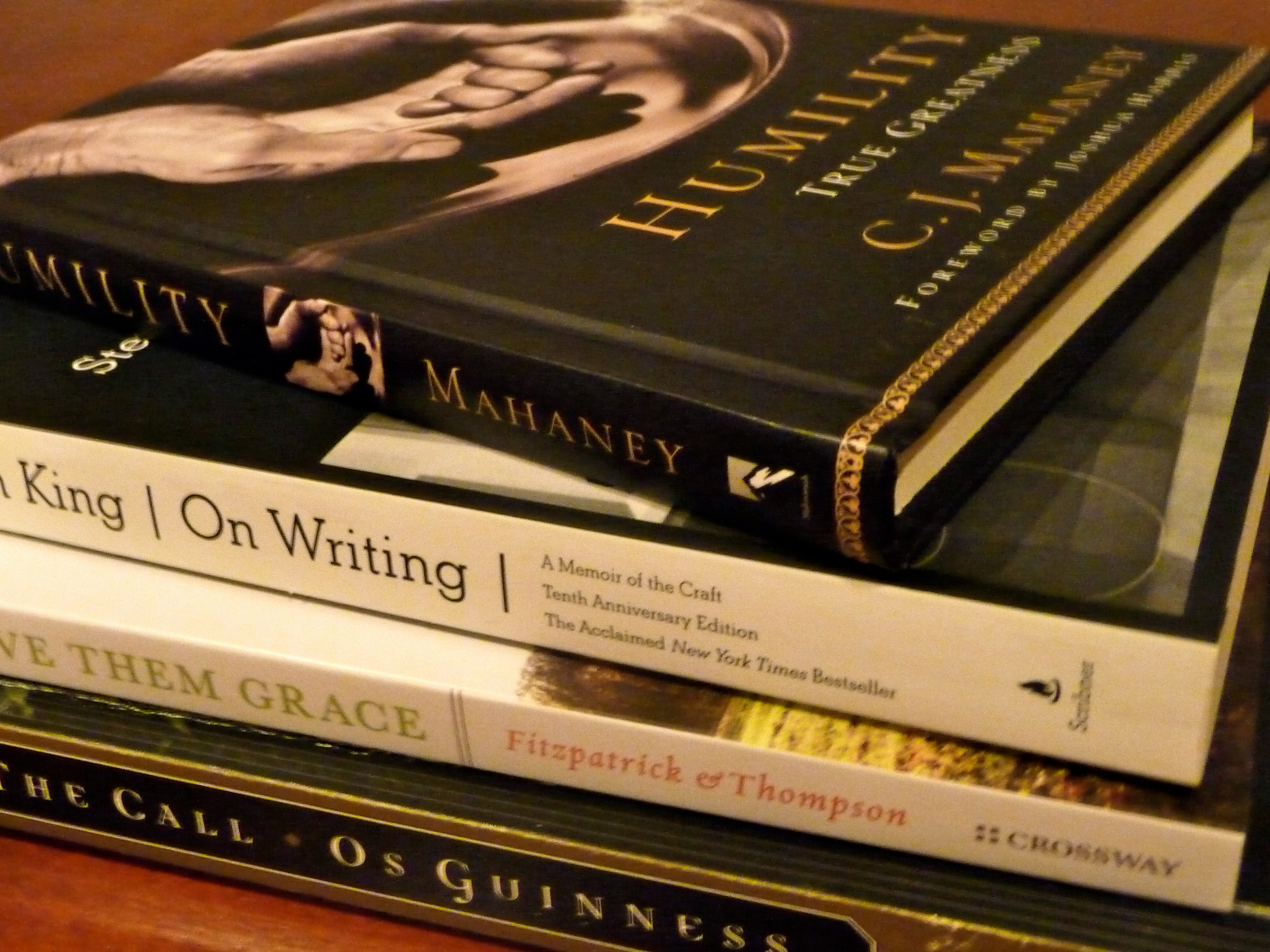
I was inspired by one of my favorite bloggers, Lindsay of Passionate Homemaking, to create a yearly book list.  My goal is to be intentional about reading books that strengthen my walk with God, deepen my perspecitive of biblical womanhood, and refresh me in my role as a wife and mom.  I’ve also included books that simply cater to my personal interests.  As you can see, I’ve kept the fiction list short.  For me, reading fiction takes about as much discipline as eating Klondike bars.  That being said, the fiction list is likely to grow throughout the year as I peruse the library.  The non-fiction list is a different story.  It will be a challenge to read all these.  Like everything in my life, the list is subject to change throughout the year, but for starters, here it is:

Non-Fiction

Biblical Womanhood in the Home by DeMoss, Kassian, Mahaney, et al.–Written by a powerhouse of godly female authors, this book is meant to counter the feminist revolution and its lingering effects in the hearts and minds of women. 

Don’t Make Me Count to Three by Ginger Plowman–This short book on discipline comes highly recommended by friends.

Give Them Grace by Elyse Fitzpatrick and Jessica Thompson–This book has been on my reading list for a while.  I’m eager to learn more about raising our kids with a grace-centered, gospel worldview.

Humility by C.J. Mahaney–Not only do I love C.J. Mahaney, I could use a good dose of humility.  Excited to read this little book and hopeful about the fruit it will bear.

Joni and Ken: An Untold Love Story by Ken and Joni Eareckson Tada–Joni Eareckson has been a longtime hero of mine.  As a child I use to put her cassette tape in our tape player and listen to her songs over and over again.  Her story has always captivated and inspired me, so when I saw this new book being released in April I nearly jumped out of my skin.  Expect a book review!

On Writing by Stephen King–One of my favorite fiction authors (Charles Martin, seen below) recommended this book for aspiring writers.  I will confess, it was so good that I read the entire thing before I could get this book list up.  So, there are two things you should know: King truly is master of the craft, and he has quite a potty mouth.  If you’re able to overlook the latter, he will be the best writing coach you’ve ever had.

The Call by Os Guinness–This past year my husband and I have spent significant time discussing our calling.  We decided to read this book together with another couple in our church.  Only on chapter three, and already loving it!

The Hospitality Commands by Alexander Strauch–I chose this book because I want to grow in hospitality.  I’ve never felt particularly strong in the area, and I think a fresh biblical perspective is in order.

The House that Cleans Itself by Mindy Starns Clark–Do I really need to explain the appeal to this one?  I didn’t think so.

The Prodigal God by Tim Keller–Although books about Christian issues are helpful, I think it’s encouraging to read a book focused on the character of God Himself once in a while.  Since I enjoyed The Meaning of Marriage so much, I thought I’d give another Keller book a try.

Fiction

The Mountain Between Us by Charles Martin–This is just for fun from one of my favorite Christian fiction authors who writes like a male, sanctified Jodi Piccoult.  In this particular novel–a young doctor, a bride-to-be, a fateful plane crash, a fight for survival…oh boy!

Two Crosses by Elizabeth Musser–One of my followers responded to my post on “Confessions of a Housewife” with the suggestion that I check out Christian fiction author Elizabeth Musser.  I am always on the hunt for good Christian fiction and can’t wait to sit down with this historical novel!  The book is the first in a trilogy, so if I like it, I’ll add the next two to my list.

If you want to follow my progress or check out my 2012 list, you can click on the “Yearly Reading” page above.  Happy reading!

Murder in Newtown

permalink[1]

“My heart is in anguish within me; the terrors of death have fallen upon me.  Fear and trembling come upon me, and horror overwhelms me… “  (Psalm 55:4-5)

Like the Psalmist, our nation reels with horror in the wake of merciless evil.  If you are wondering where God is in the midst of it all—how to fit such atrocity into your theology—I have linked some articles below from giants of the faith.  I hope they will strengthen you, as they have me in the face of devastation.

Rachel Weeping for Her Children—The Massacre in Connecticut: Al Mohler answers the question, “How should Christians think and pray in the aftermath of such a colossal crime?”  He gives a four-point answer before concluding with the painful and timely reminder that the Christmas story also includes the mass murder of children, an event that prompted Matthew to cite Jeremiah 31:15, an achingly powerful verse: “Thus says the LORD: ‘A voice is heard in Ramah, lamentation and bitter weeping.  Rachel is weeping for her children; she refuses to be comforted for her children, because they are no more.’”  Among the articles I am posting, Mohler’s is the longest and most comprehensive article about how believers should process this tragedy.

School Shootings and Spiritual Warfare—Russell Moore focuses on the satanic evil that thirsts for the blood of children, writing: “throughout the history of the universe, evil has manifested a dark form of violence specifically toward children.”  He cites Jewish commentator John Podhoretz, who pointed out that the Hebrew god Moloch demanded the blood of children, sacrificed in the valley of Ghenna—the very valley Jesus pointed to when teaching about hell.  Dr. Moore demonstrates the unique ways that children point to Christ, and therefore, the damnable truth that “Satan hates children because he hates Jesus.”

A Lesson for All from Newtown—John Piper asserts that murdering an image-bearer of God is nothing short of “treason against the creator of the world.”  He points the finger at all of us, worthy of God’s righteous judgment.  In this way, Newtown is a warning to us: “Not a warning to see our schools as defenseless, but to see our souls as depraved.  To see our need for a Savior.”

“But I call to God, and the Lord will save me.”  (Psalm 55:16)

Real Marriage vs. The Meaning of Marriage

008

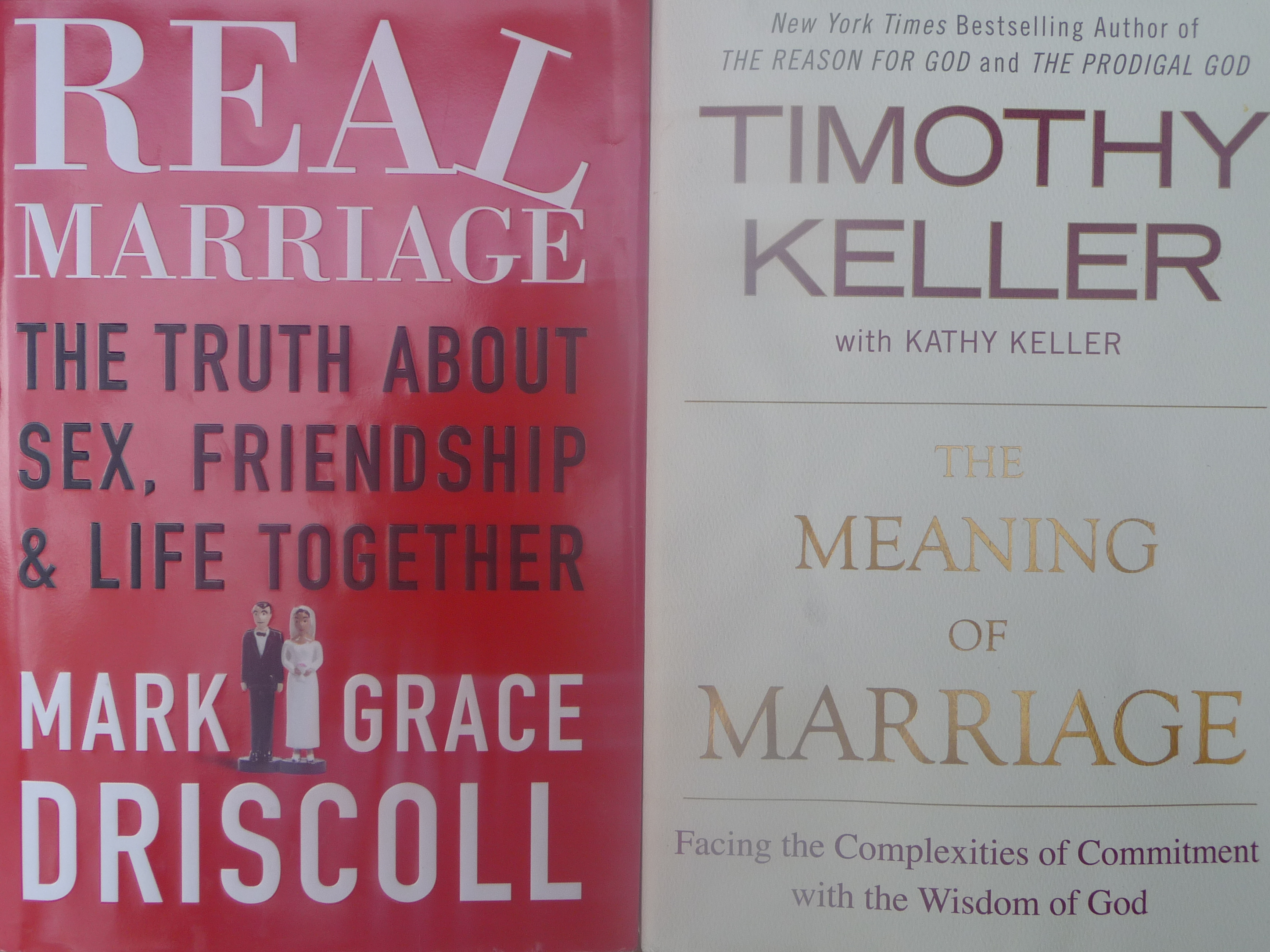
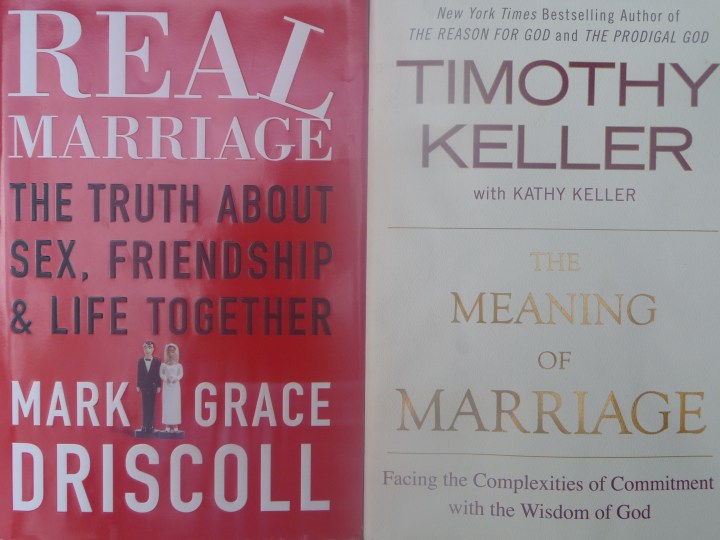
In 2011 Tim and Kathy Keller came out with the book The Meaning of Marriage: Facing the Complexities of Commitment with the Wisdom of God.  In 2012 Mark and Grace Driscoll released Real Marriage: The Truth about Sex, Friendship, and Life Together.  The two books are arguably the most popular recently-released books on Christian marriage, and this year, I was blessed to read both.  If you’re considering either one, the following are some personal reflections that may guide you as you decide which book to cozy up with this Christmas.

Despite being authored by two very different men, the books possess some basic similarities.  Both books have an accompanying sermon series.  (One was birthed out of a sermon series while the other inspired a sermon series.  Either way, if you’ve got a long drive to make this holiday, keep them in mind.)  Although predominantly written in the husband’s voice, both books were written by a husband and wife team.  In addition, both husbands are widely respected pastors, and the opportunity to peek behind the curtain of their private lives is powerfully impacting, not to mention interesting.

The most significant difference between the books is the style in which they are written, and the angle from which they approach the topic of biblical marriage.  Driscoll’s book is written conversationally and more firmly rooted in his personal life and journey.  In the very first chapter of his book, he and Grace plunge into the story of their marriage with brutal honesty.  I think my jaw was somewhere near my knees throughout the entire chapter.  Not only was I shocked that they endured such rocky waters in their marriage, I was amazed at their vulnerability in sharing it.  And I was deeply encouraged.  I kept thinking to myself, “Mark Driscoll went through this??”  Without meaning to, I can often listen to speakers like him and assume they’ve had a peaches-and-cream life—been the perfect husband, with the perfect wife, leading the perfect family.  Chapter one of Real Marriage dashed that illusion, and in so doing, it gave me the courage to look at my own marriage with the same frank honesty.  In this way, by humbly stripping away all pretenses, the Driscolls build an immediate trust with their readers, making the rest of their message more easily received.

However, their highly personal approach can also serve as a weakness in that much of the content of the book appears to stem from their own personal journey.  For instance, one of the greatest criticisms concerning Real Marriage is its significant focus on sex; the second half of the book is dedicated solely to the issue, which some have believed to be a disproportionate emphasis.  I personally believe the Driscolls were influenced by their own journey, and because sex was a significant issue in their marriage, they give it significant attention in their book.  They also overcame past traumas including sexual abuse and pornography—each of which is given a chapter in their book.  This manner of writing makes Real Marriage personal and impacting, but also limited in its scope.

The Meaning of Marriage takes an entirely different approach.  From the get-go, Keller looks to research and statistics to examine our culture’s view of marriage.  At face value, it is more difficult to “get into” Keller’s book simply because he is methodical.  Where Driscoll dives in with a jaw-dropping story, Keller carefully builds his case.  But in the end, the case that he builds is powerfully substantial, and in my experience, more lasting than that of Real Marriage.   While I remember interesting anecdotes from Driscoll’s book, The Meaning of Marriage changed my entire worldview regarding marriage.  By building a gospel-centered framework within which to view marriage, Keller’s book systematically re-trained my heart and mind to think biblically about marriage.  To offer a visual analogy, reading Real Marriage was a little like sitting in front of a bulletin board pinned with an array of different marriage principals.  A lot of good stuff, but unrelated and hard to remember.  Reading The Meaning of Marriage was like watching a diagram come together piece by piece.  In the end everything’s related, and the concepts hold together because they are rooted together.  In this way, while Real Marriage immediately pulls readers in, attention can just as quickly be lost because the concepts feel isolated and disconnected.  However, the more one reads Keller’s book, the more fascinating it becomes as the gospel-perspective of marriage unfolds with practical implications.

A Synopsis of The Meaning of Marriage
Keller opens his book by examining our culture’s current pessimism toward marriage, a pessimism that ironically stems from unrealistic idealism about marriage.  Because we as a society have a flawed view of marriage, our expectations of marriage are not only selfish, they are sky high.  The realization that one person cannot satisfy us completely (not to mention pick up after himself!) is frustratingly disappointing.  But, as Keller points out, “This is the secret—that the gospel of Jesus and marriage explain one another.”  Marriage was always intended to be a reflection of the self-giving, saving love of Jesus Christ—a far cry from our cultural demand that marriage better bring me personal happiness, or else!  This then is the key:  “If God had the gospel of Jesus’s salvation in mind when he established marriage, then marriage only ‘works’ to the degree that approximates the pattern of God’s self-giving love in Christ” (p46).

Chapter two unearths the “cancer” of self-centeredness and the vital necessity of the Holy Spirit to daily overcome it.  Chapter three (perhaps my favorite in the whole book) tackles the age-old question—where have all the butterflies gone?  As a woman who’s foolishly let pop culture tutor me on love and romance, this chapter was hugely freeing and empowering.  In defining the difference between a “covenant” and “consumer” relationship, Keller convincingly illustrates that God’s covenantal prescription for marriage truly brings the greatest and most lasting love—love that is not rooted in the flighty whims of feeling.  Chapter four examines the purpose and subsequent priority of marriage, honing in on the joy and power of spiritual friendship.  In my own copy, this chapter has a few sections that simply say, “Wow” in the margin because I was too convicted to think of anything else to write.  Take this quote for instance:

“What keeps the marriage going is your commitment to your spouse’s holiness.  You’re committed to his or her beauty.  You’re committed to his greatness and perfection.  You’re committed to her honesty and passion for the things of God.  That’s your job as a spouse.  Any lesser goal than that, any smaller purpose, and you’re just playing at being married” (p123). 

Having established a gospel-centered perspective of marriage, the remaining chapters become more focused on how to practically apply this perspective to daily living.  Chapter five delves into the incredible power each spouse has for building up or destroying based on how a spouse chooses to wield “truth” and “love.”  Keller also discusses “love currencies” (similar to “love languages”).  Chapter six, written in Kathy’s voice, ventures into the controversial subject of male female differences and gender roles.  Chapter seven is written specifically for singles (finally, a marriage book that addresses singleness with more than two sentences!)  And lastly chapter eight addresses sex, its biblical basis, and why it’s most celebrated within marriage.

A Synopsis of Real Marriage
Real Marriage is broken into three parts.  As mentioned earlier, chapter one is mostly a re-telling of the Driscolls’ own marriage story.  Chapter two asserts one of the fundamental premises of the book—that “marriage is about friendship” (p23).  Driscoll creates an acrostic using the word “FRIENDS” to teach seven biblical principles for marital friendship.  Chapter three is written directly to men (yes, I read it…I was so curious—wouldn’t you be?) One of my favorite things about this chapter is Pastor Mark’s frank, practical, “cut-through-the-malarkey” tone of voice toward men.  You could easily ask any guy, Christian or not, to read this chapter, and I guarantee he would find it amusing, convicting, and helpful all at the same time.  In the most impacting section of the chapter, Driscoll speaks to the balance between being tough and tender.  He uses characters like “Give ‘em Hell Hank” and “Little Boy Larry” (and lots more) to demonstrate how skewed masculinity manifests itself.  I had to marvel in this section at Driscoll’s ability to be hilarious and sobering at the very same time.  Chapter four, written in Grace’s voice, teaches women how to have “heads, hearts, and hands” of respect, while chapter five addresses the necessity of repentance and forgiveness in marriage.

Part two of Real Marriage looks to the sexual relationship, beginning with chapter six which describes the three ways people tend to view sex—as “God” as “gross,” or as a “gift.”  Chapter seven, written in Grace’s voice, deals with how to recognize and respond to a person who’s been sexually abused.  Chapter eight conveys the far-reaching effects of pornography both spiritually and neurologically.  Chapter nine outlines the difference between being a “selfish” lover and a “servant” lover.  Chapter ten, entitled “Can We __?”, is the book’s most controversial chapter, employing I Corinthians 6:12 to assess what is sexually permissible within marriage.  Again, I think the Driscolls are writing from experience.  As a highly influential pastor, Mark has heard hundreds of people ask the same questions—questions they’re embarrassed to ask, but questions for which they want biblical answers.  Personally, I admire the Driscolls for tackling real and relevant issues that many other authors avoid.  Nevertheless, critics have argued that his I Corinthians 6:12 grid for assessing these issues is faulty because it is rooted in what is “lawful and beneficial” rather than the finished work of Christ.  Finally, part three of Real Marriage is comprised of a single chapter with practical advice for how to “reverse-engineer” your life and marriage.

A Word to Singles
While I was reading Real Marriage, a close single friend asked me whether I thought it would be a beneficial read for singles.  I thought about it for a while before telling her, no.  While I think the accompanying sermon series would probably be helpful for singles, in my opinion, the book simply delves too deeply into sexual issues to be beneficial for singles.  I would, however, highly recommend The Meaning of Marriage to singles.  Ironically, Keller shares that it was the vast number of singles in his church that actually compelled him to write this book on marriage.  He saw warped mentalities alive within the singles of his church, from idealistic beliefs that marriage is an “end-all” to the Seinfeld approach for dating that disqualifies anyone with big hands or strange moles.  It’s no surprise his chapter on singleness is outstanding.  Keller addresses the “goodness” of singleness as well as the difficulty of it, and how to live with a healthy balance of desire and contentment.  He teaches the history of dating, and spends substantial time sharing “practical counsel for marriage seekers.”

Final Thoughts
What are you looking for in a book about marriage?  I suppose, the better question would be, what are you looking for in your marriage?  What are the issues you face?  If you have a past with sexual sin, abuse, or pornography, and are experiencing the ramifications in your marriage, Real Marriage could be a hopeful and edifying read.  If you are waning under the weight of disillusionment, disappointment, or confusion then step into the Kellers’ classroom for a couple of weeks.

Although both books have great attributes, in the end, I must agree with Tim Challies.  When asked to recommend a marriage book, The Meaning of Marriage will be my very first choice.  It is thorough, comprehensive, and cohesive.  In short, if you’re looking to slap a band-aid on your marriage, you can keep on walking past this one.  Tim Keller is not interested in the six simple steps to a happier marriage, or the five key strategies for clearer communication.  He is interested in examining the ideology behind marriage, the original intent of marriage, the meaning of marriage as defined by the Author of marriage. And if you’re willing to follow him on this journey, you’ll discover something far more lasting than the five strategies for clearer communication.  You’ll discover that the true secret to marriage is rooted in one place only—the gospel of Jesus Christ.

Top Ten Favorite Purchases of 2012

Just for fun I thought I’d share my favorite items of 2012, in case anybody’s getting a head start on Christmas shopping…or Christmas wish-list-writing!  Not all of these things were “newly released” this year; they were simply acquired in our household throughout the year.  In reverse order, here are my 2012 favorites:

10. Mariposa Birthday Candle Holders

This is a great gift idea for a woman who’s got everything.  My sister-in-law gave them to me this year, and I love them!  We have used them on everybody’s birthday cake.  Aubrey has already memorized the “3” in anticipation of it appearing on her cake.

.

9. Inchbug Orbit Labels

Whoever invented these is a genius.  You can buy 4 personalized labels for $12 and never lose a sippy cup again!  (Photo courtesy of www.inchbug.com)

.

.

8. Sand and Water Table

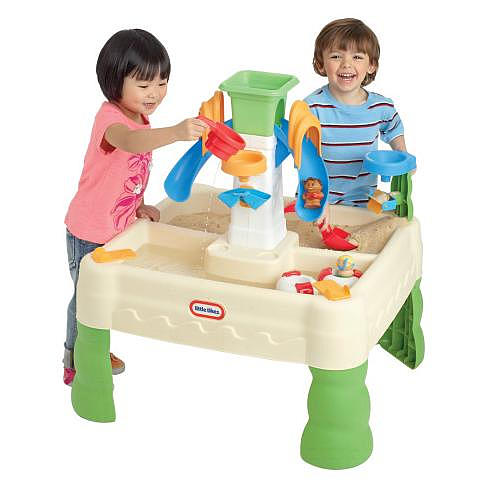
We were given a hand-me-down water/sand table from our dear friends when they moved overseas, and it is awesome!  When it’s warm outside, Aubrey can play all by herself, “bathing” baby dolls, “cooking” with Mommy’s bowls, floating boats…  Finally, a safe way to play with water unsupervised.  (Photo courtesy of http://www.toysrus.com/product/index.jsp?productId=11145187)

.

7. Etsy Personalized Necklaces

I have fallen in love with Etsy jewelry.  It’s the perfect gift for all the sentimental women in your life because everything is made-to-order by hand.  (Photo courtesy of https://www.etsy.com/transaction/101844384)

.

.

6. Personalized Shutterfly iPhone Cover

This was my Father’s Day gift to Clint, and I must admit I thought it was terribly clever.  It’s so hard to buy a guy a sentimental gift because they don’t wear jewelry, or care much for monogrammed things or framed pictures.  You can custom design a case at www.shutterfly.com with your own special photos.

.

5. Swing Set

If the grandparents have asked you what to buy their grandkids this year and you don’t own a swing set, it’s worth its weight in gold!  When everybody’s at their wits end, “Who wants to go swing and slide?!” is always a great thing to yell.

.

.

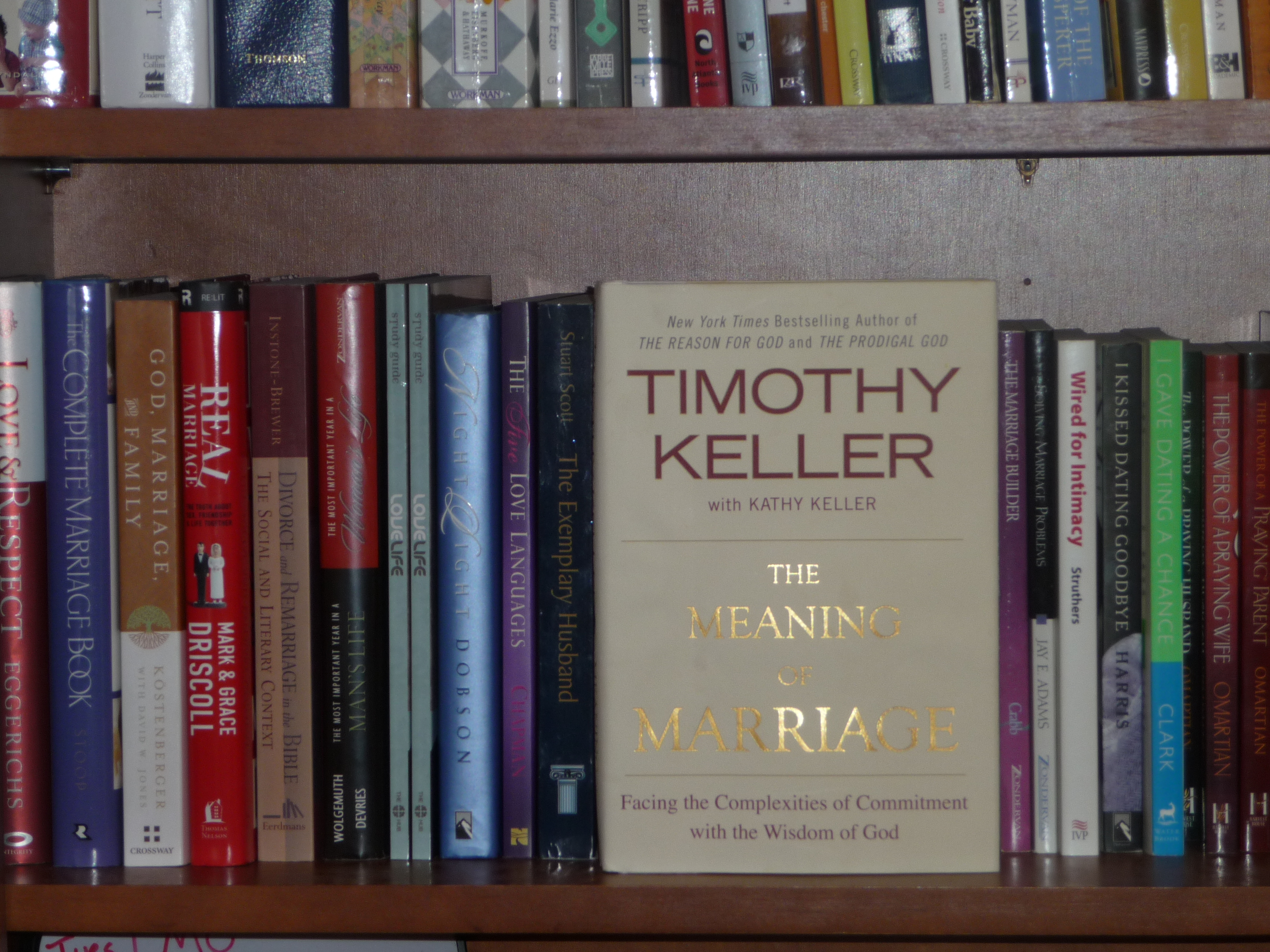
4. The Meaning of Marriage

At some point I will probably give this book its own individual post because it has so deeply impacted me.  But suffice to say, it cut straight to the heart of many of my personal struggles in marriage.  In my opinion, it’s the best marriage book of 2012.

.

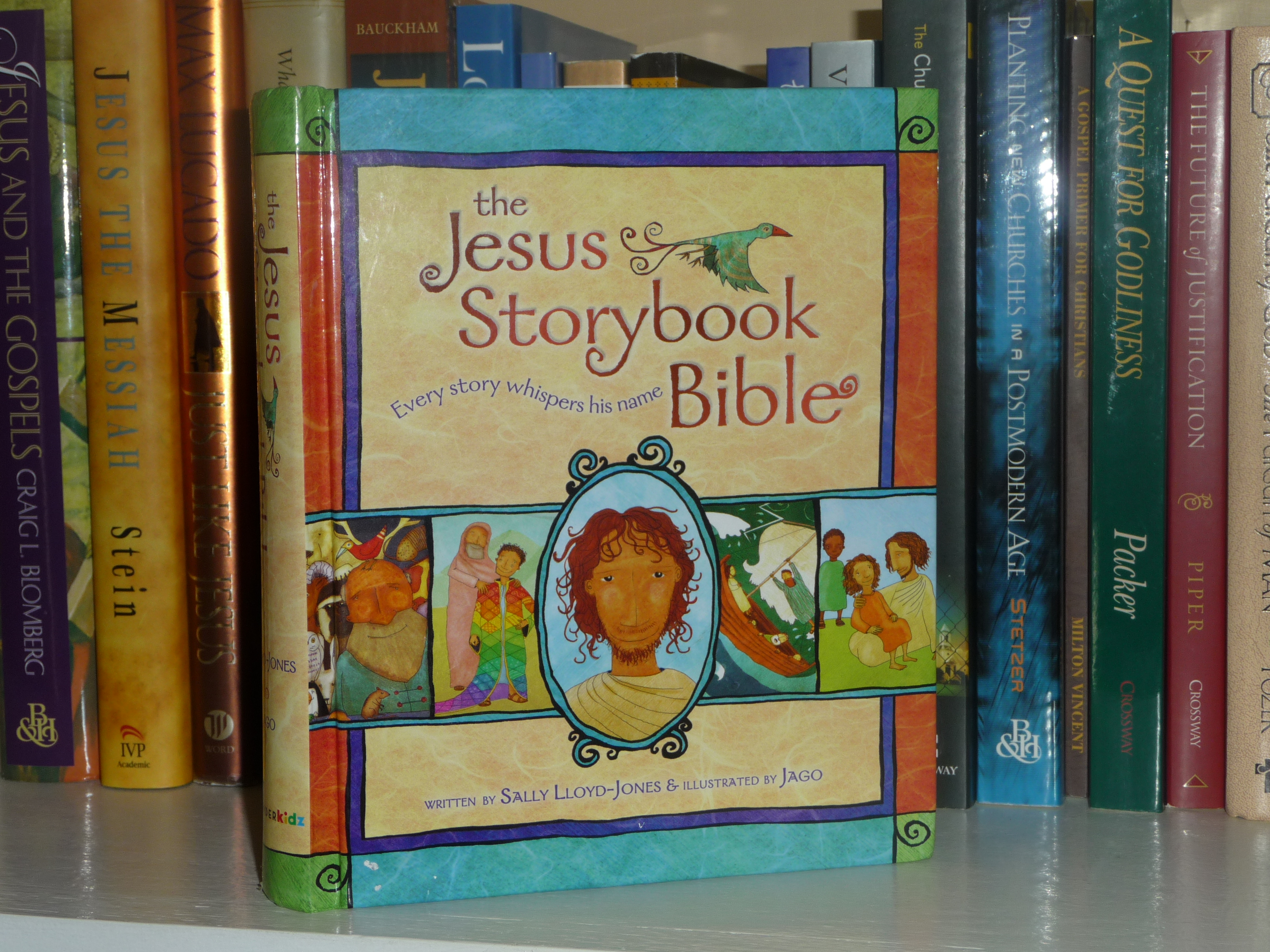
3. The Jesus Storybook Bible

This book is a must-have for children!  Our church gives them away at baby dedications, and ours has been dearly loved ever since.  The unique thing about this particular children’s Bible is that it places Jesus at the center of every story–Old and New Testament alike.  After reading it for less than a year, my three-year-old can already find her favorite stories, name the characters, and tell the stories back to herself.  Just today I saw her flipping through the resurrection story saying, “And then the stone was all gone, and Jesus could get out.”  (turn the page)  “Jesus is ALIVE!  He is not dead anymore!  And look, Heidi, no more boo-boos!”


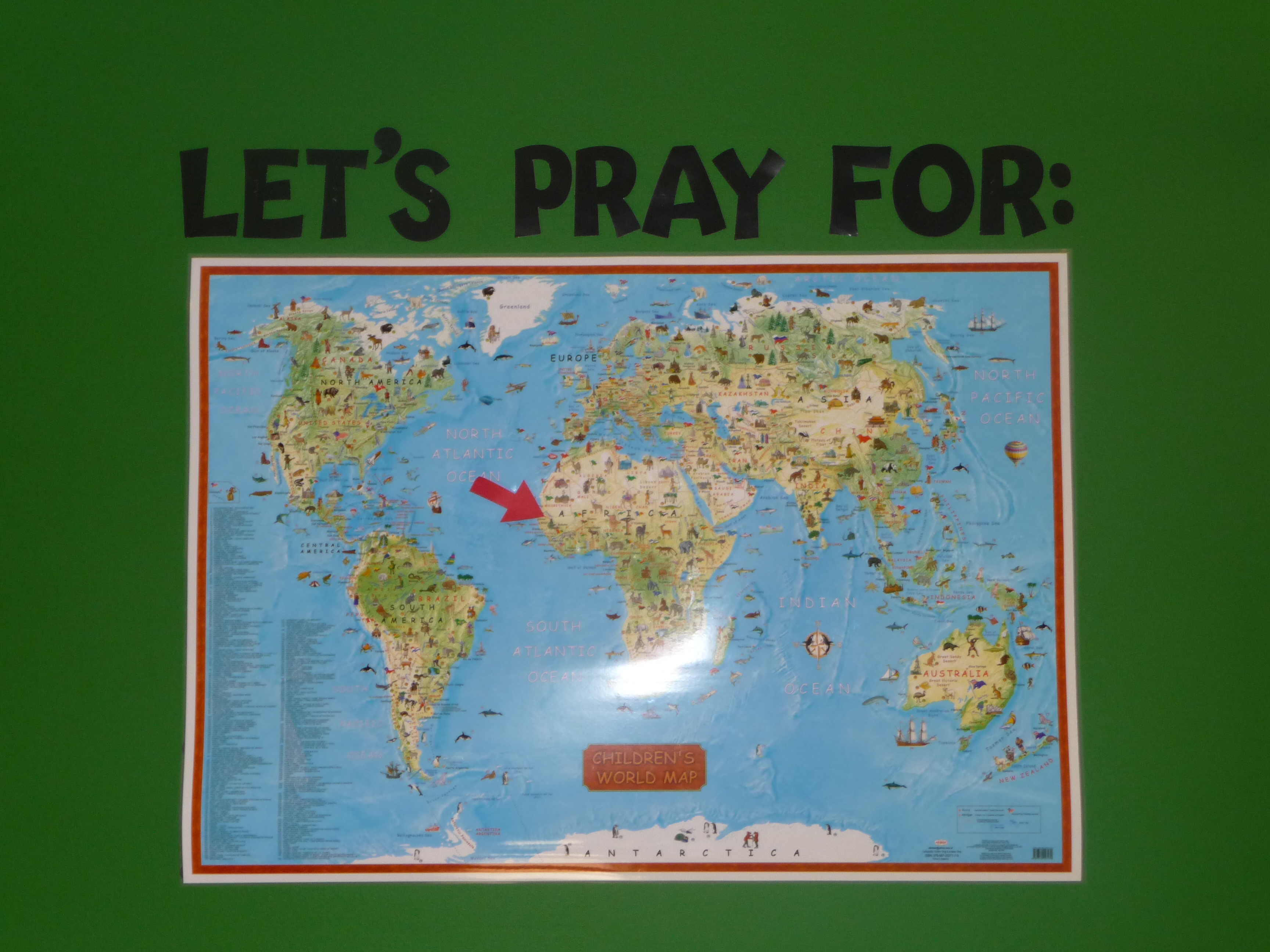
2. Illustrated Children’s World Map

We bought this children’s map to teach our kids about praying for the nations.  The best thing about it is that it’s covered with illustrations to help kids learn about the animals, flags, and exports of various countries.  It’s easier for Aubrey to remember where countries are located because she can look for the animals associated with them.

.

1. Bowflex Dumbbells

This is my all-time FAVORITE purchase of the year!  Each dumbbell adjusts from 10-90 pounds with a single “click.”  Although pricey, when you factor in the cost of buying 10-90 pounds in individual dumbbells, it’s a steal.  Not to mention, they take up a fraction of the space.  But my favorite feature is the accessibility.  Instead of joining a gym, my husband and I opted to invest in exercise equipment for our home.  So I can work out while the kids nap, or (since the “gym” doubles as a playroom) turn on some music and let the kids play while I lift weights.  Amazingly, one of the most fun times of the day is when Daddy gets home and lifts weights.  As I’ve mentioned before, Daddy is the life of the party and Aubrey has her own set of dumbbells, so altogether it is hilarious to watch.  If he ever lets me, I’ll post a you-tube video 😉

Assessing the Princess Obsession

tutugirlOne day, about a month before her birthday, I casually asked Aubrey what sort of party she’d like.  She stared at me blankly.  Because I’m not a do-it-yourself kind of girl, I thought of the limited party-plate selection at Wal-Mart, and prompted, “You know, like a Dora party or a princess party?”  Aubrey considered for a moment, then announced, “I want a princess party.”  Okay, done!  Immediately I thought of the $5 Ariel costume I’d picked up at a consignment sale for trick-or-treating.  Perfect!  The simplicity was satisfying—there were 86 billion princess party supplies at Wal-Mart, and she would get 2 uses out of her Ariel costume.

But in the weeks that followed, I began to have second-thoughts.  As Heidi’s birthday came and went, Aubrey grew increasingly excited about her upcoming princess party.  She talked about princesses, wanted to watch movies about princesses, and adoringly dressed the Polly Pocket princesses at her friend’s house.  My doubts grew.  But I’d already told grandma about the princess party, and the day after she heard, all 86 billion princess party supplies from Wal-Mart were deposited in my dining room, along with a few princess coloring books just for fun.  Before long, Aubrey knew all the Disney princesses by name and dress color.  Finally, one night, I voiced my concerns to Clint.  “You know, I’ve been thinking…what if we did a ‘God’s princess’ theme?  We could put up a big sign that says, ‘I know I’m a princess because my Father is the King of Kings!’”

“Sounds kinda cheesy,” Clint said.

*Sigh.  Back to the drawing board.  In the end, I’ve chosen to keep the princess party theme, although it will hardly be a “Toddlers in Tiara’s” extravaganza.  In fact, only grandparents have been invited, so there will be exactly one dress-up princess in attendance—Ariel.  But the whole ordeal has caused me to consider carefully the messages and media I’m encouraging in our home.

There is something beautiful and dangerous in the “princess” theme.  I never taught my daughter to find pink puffy dresses and princesses fascinating.  I doubt many moms do.  Nevertheless, the phenomenon lives.  Why?  Because it captures the female heart.  It speaks of our desire to be precious, to be valued and treasured and loved.  All of these messages I want to drive deeply into my daughter’s heart—you are precious, you are valuable, you are of incredible worth because God Almighty created You, gave His very life to redeem you, and pursues you even now.  You will never meet a King as mighty, nor a Prince as romantic as Jesus Himself.  In belonging to Him you will find all the worth your soul ever craves. 

But this is only one side of the coin.  The princess theme is also engaging because it caters to our sinful longing to make much of ourselves.  And that is the aspect of the princess obsession that I despise.   Not the desire to be special, but the desire to be the most special, the most beautiful, the most important, the most glorified.  As a mother who desperately loves my daughters, I see a powerful beast alive in the princess mentality, and it makes me want to don some knightly armor and rescue my daughters myself.  I want to protect them from the arrogance of entitlement, the addiction to self-glory as ancient as the Tower of Babel.  But the truth is, plastering a cheesy banner across my living room wall doesn’t make me a knight any more than fastening orange extensions into Aubrey’s hair makes her Ariel.  There is only One Warrior with the ability to protect my daughters, only One Hero with the capacity to satisfy them.  And my greatest hope for raising my girls in godliness is daily throwing myself upon His mercy.